 English (United Kingdom)
  Italiano (IT)

who I AM
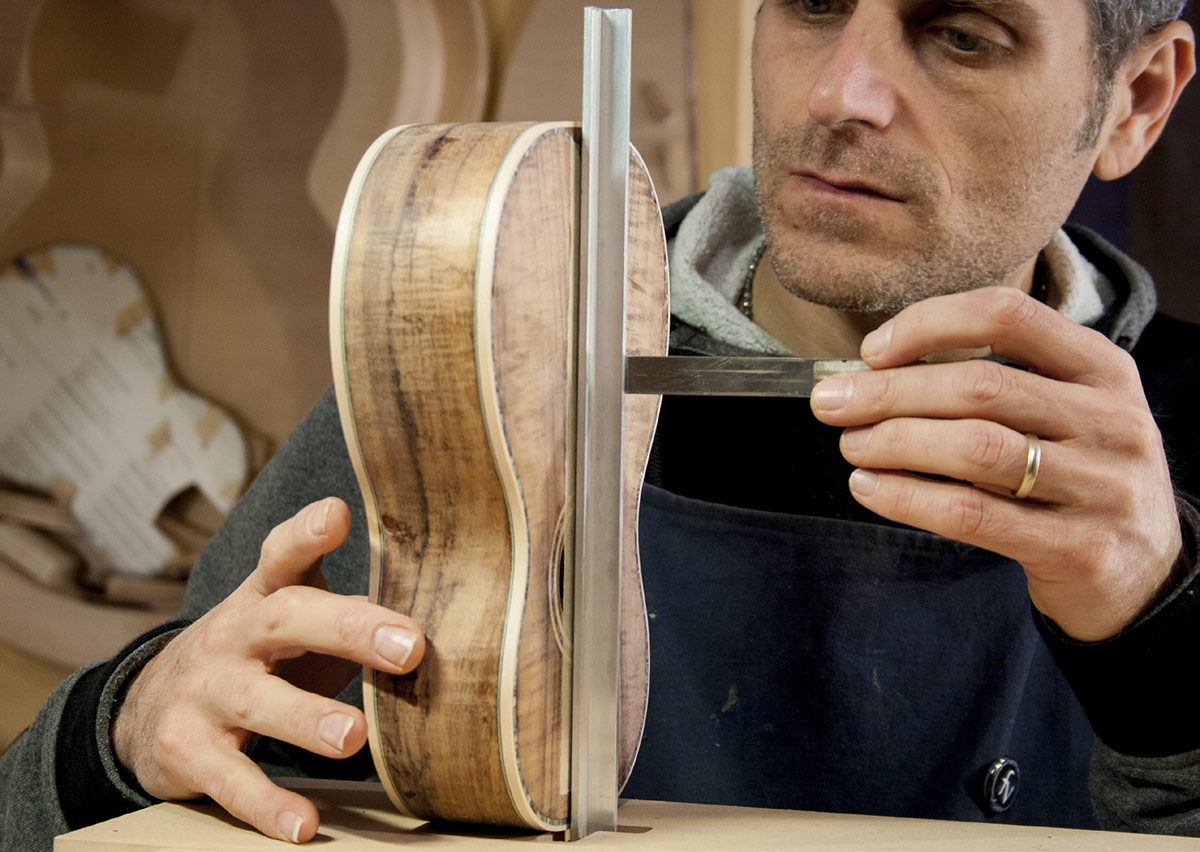
Francesco Verginelli was born in Rome on February 2, 1977.
After completing high school in the scientific field, he specialized in 3D graphics at the Quasar Institute in Rome. He obtained Autodesk certifications with authorization to teach Autodesk software such as Autocad and 3D Studio Max. He is an expert in 3D modeling, advanced lighting, texturing, and design.
At the young age of 21, he joined the Italian National Research Council (CNR).
He has been studying music and playing the guitar since adolescence. Passionate about acoustic guitars, after visiting the Taylor Guitars factory in El Cajon, he decided to pursue a career as a luthier in 2010. For just over a year, he apprenticed at the workshop of Master Pier Luigi Panfili, the current Master of the Roman Academy of Lutherie, building two acoustic guitars.
Being an avid ukulele player, he decided to build one for himself in 2011. This ukulele, a Kasha Tenor model in Hawaiian koa, has never been put up for sale and is still in his possession.
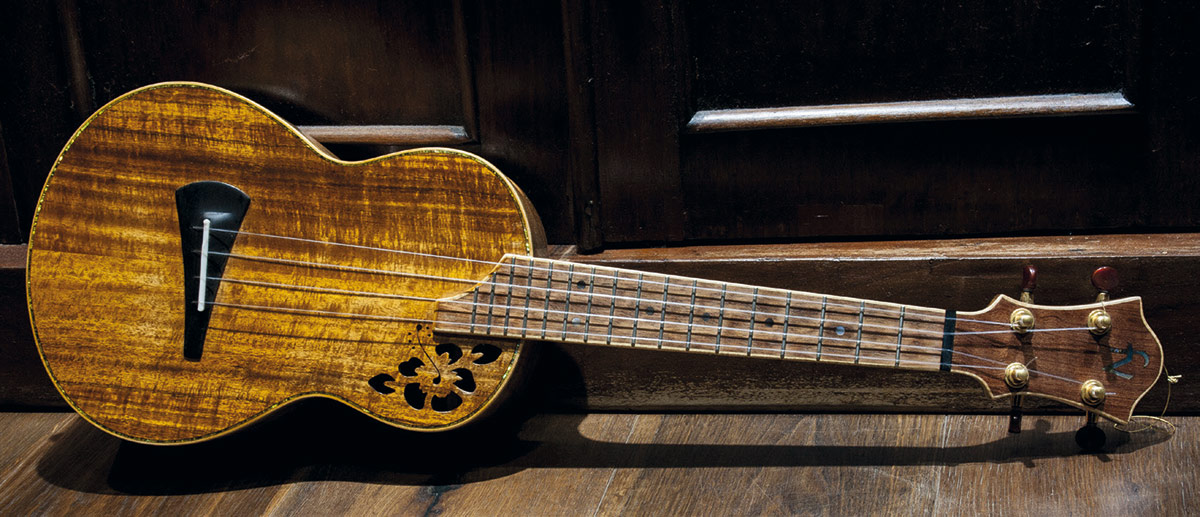
From that moment, he was struck by a great passion for this instrument and decided to specialize in two models: tenor and soprano. Over the years, he has developed his personal Tenor X-bracing project, which is constantly evolving.
Although his main focus is on ukulele construction, he also builds other types of acoustic instruments such as basses, guitars, and various prototypes.
His production typically involves crafting 4 or 5 instruments per year.

The Building Philosophy
"...woodworking is the art and skill of creating objects, works, or structures..."
In this brief description, I will try to express my construction philosophy — something I believe is essential to truly understand my instruments.
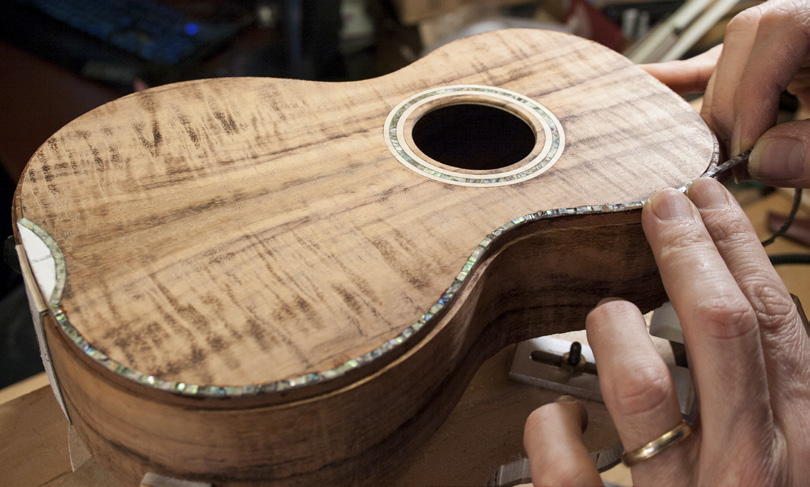
My approach to building has remained consistent since the beginning. Over time, I have simply developed a clearer understanding of processes that were once largely instinctive.
I have gradually refined my working method while preserving that instinctive element, which has always been central to my work. I continue to seek a balance between method and intuition, giving proper weight to both.
I build one instrument at a time, treating each one as if it were the only one — with the aim of creating an object that reflects who I am at that particular moment in my life. A relationship forms between me and the material, and through the act of building, I try to leave my mark on it.
Every detail is conceived and crafted entirely by hand. By choice, and in keeping with my philosophy, I do not use CNC technology.
I draw each instrument before building it. Even when a new piece is very similar to a previous one, I prefer to work from fresh templates — it gives me complete control over what I am about to make.
Each instrument requires approximately 220 hours of work, from design to completion. This naturally limits my annual production to around 4 or 5 instruments.
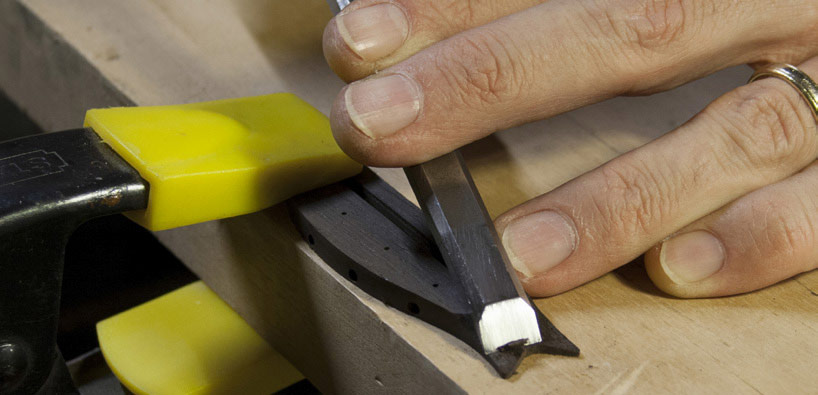
I use only the finest tonewoods, maintaining a small personal stock so I can choose pairings freely as the work takes shape. Among them: red spruce from Val di Fiemme — the same forest from which Stradivari selected wood for his instruments — tropical mahogany, Hawaiian koa, and well-seasoned rosewood.
For finishing, I use two methods. French polishing with shellac is my preferred choice: it is natural, intensely aromatic, beautiful to look at, and extraordinarily smooth to the touch. Oil and wax is quicker to apply and brings out the wood grain with exceptional visual depth.
Building instruments — ukuleles above all — is a deep and lasting passion. It is a lifelong path, one that offers something new to learn in every session at the bench.
My aim is to leave something of myself in each instrument — something that will endure long after I am gone.

Ukulele Making Academy
UMA LAB - Lutherie School

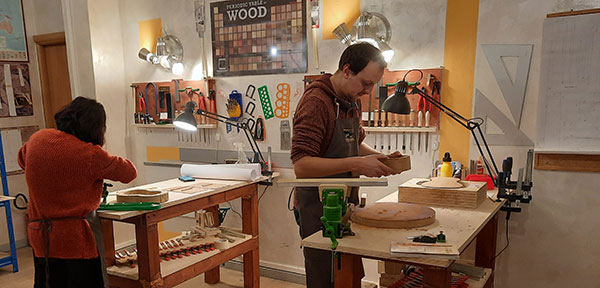
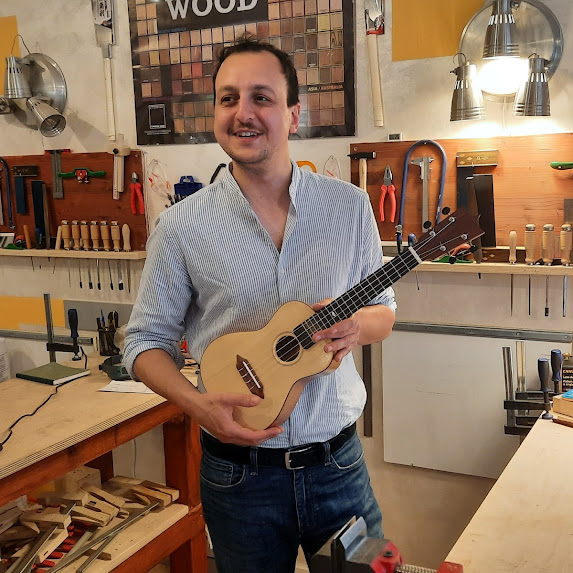
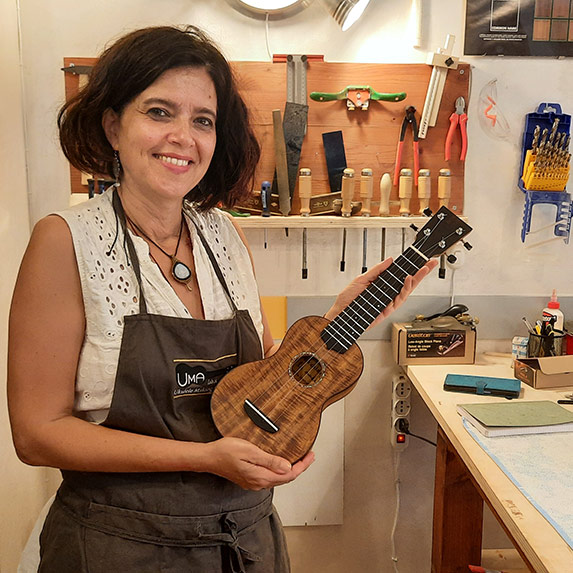
In September 2022, the UMALAB - Ukulele Making Academy school opens in Rome.
The school is born out of the need to create a cultural gathering point inspired by lutherie, where the ukulele takes center stage.
Diario di costruzione di un ukulele soprano
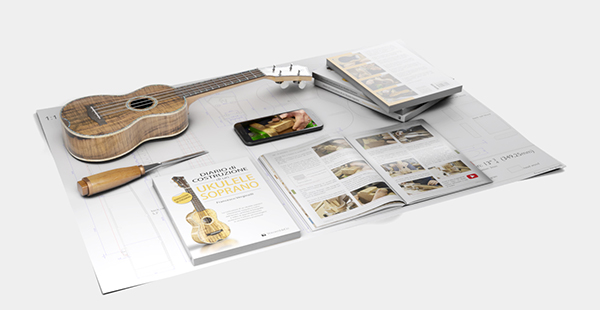
In 2022, he publishes the "Construction Diary of a Soprano Ukulele," edited by Volonté&co. (Only in Italian).
This manual provides a detailed account of the entirely handmade construction of a soprano ukulele: technical details, hundreds of photographs, and in-depth videos.
"... the goal is to try to imprint one's character on an artifact that will represent us even after our existence..."
The Building Philosophy
"...woodworking is the art and skill of creating objects, works, or structures..."
In this brief description, I will try to express my construction philosophy. I believe it is crucial to fully understand my instruments.
My approach to construction has always remained the same since I started. Over time, I have simply gained a more concrete understanding of some processes that were previously instinctive and partly unconscious.
Throughout the years, I have undoubtedly refined a working method by honing the instinctive part, which has been prominent since the beginning. I continue to strive to find a balance between method and instinct, giving due importance to both components.
I build one instrument at a time, focusing on it as if it were the only one, with the aim of creating an object that represents me in that period of my life. In a way, a relationship is formed between me and the material, to which I, through construction, try to imprint my character.
Every detail of my instruments is defined and crafted by hand. By choice and in coherence with my construction philosophy, I do not use computer numerical control (CNC) technologies.
I love to sketch each instrument before making it. Even if it's very similar to the previous one, I prefer to have templates of the current model to have total control over the construction I am about to undertake.
To create an instrument, including the design, I spend approximately 220 hours of work.
These choices may limit my annual production, which revolves around 4 or 5 instruments.
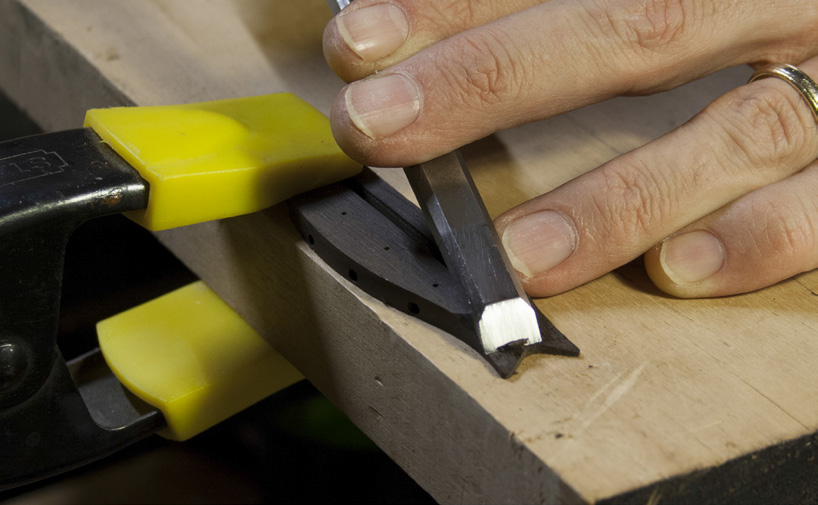
I exclusively use woods of the highest quality, of which I always maintain a small stock, allowing me to choose pairings on the spot. Just to name a few: the finest red spruce from Val di Fiemme, tropical mahogany, Hawaiian koa, well-seasoned rosewood, and others.
I employ two types of finishing:
- French polishing with shellac: This is my absolute favorite for many reasons. It's natural, highly aromatic, visually appealing, and extremely smooth to the touch.
- Oil with wax: While it's certainly quicker to apply compared to the former, it has excellent visual impact as it brings out the wood's grain optimally.
Crafting instruments, particularly ukuleles, is my profound passion.
It's an extensive journey that will last a lifetime, during which I will have the opportunity to learn something new in every work session.
My aim is to imprint my character on each instrument, representing me even after my existence.
Diario di Costruzione di un Ukulele Soprano
Diario di costruzione di un ukulele soprano
In 2022, he publishes the "Construction Diary of a Soprano Ukulele," edited by Volonté&co. (Only in Italian).
This manual provides a detailed account of the entirely handmade construction of a soprano ukulele: technical details, hundreds of photographs, and in-depth videos.
"... the goal is to try to imprint one's character on an artifact that will represent us even after our existence..."